I run a property business and I do not love property
Ask ten people why they want to buy an investment property. Most will say, “because everyone is.”
Reshmi asks clients the same question all the time. Why do you want to buy a property? Very often there is a long silence. I do not think people are hiding anything. I think they have never worked it out.
I hear people say they love property. I do not. If I am honest, I find it annoying. I love the result. Property is the vehicle. The result is what matters.
What property is really for
When we invest, we all think about the money. But what does the money actually give us? Reshmi puts it best. It gives us time, and it gives us quality of life.
That is the real answer to “why invest in property”. Not the building. Not the number of doors. The choices it opens up. Choice about how you spend your days, who you spend them with, and whether you have to work for money you could have working for you.
I learned this the hard way. For years we made investing the main thing in our life. When someone asked what I would change, I expected to say “go harder.” Instead I said I would put life first and investing in the background. I would have ended up in a similar place. I would also have collected many more memories with my kids, and missed fewer moments of pure joy.
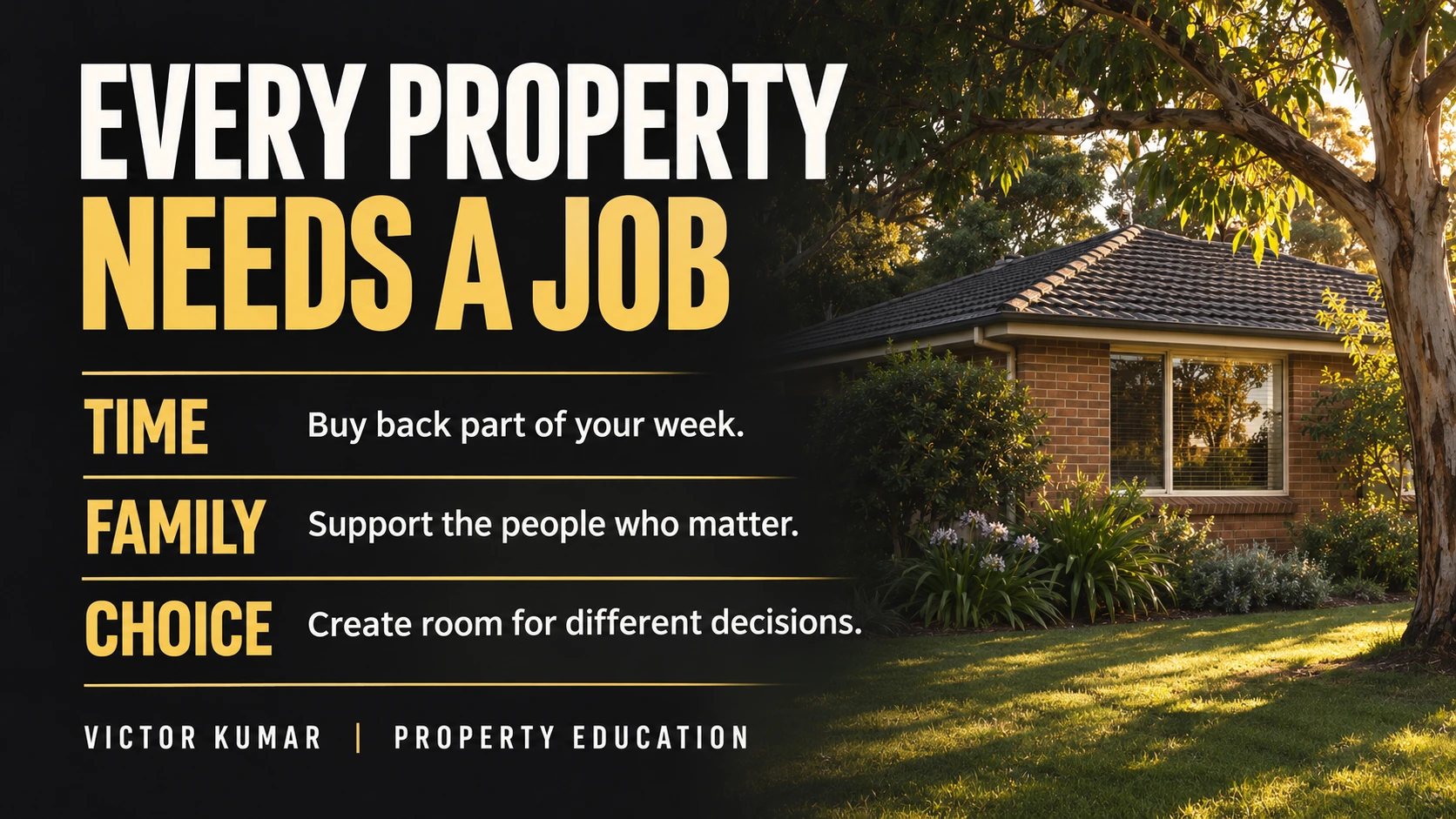
Every property needs a job
This is the habit that separates an investor from a buyer. Every property in the portfolio has a purpose.
One of ours has a granny flat out the back. The granny flat is rented. The main house is where Reshmi’s mum lives. That property has a job.
Another time, Reshmi’s dad became seriously ill while visiting us on a tourist visa, with no insurance. We sold several properties to pay for his care, including the hospital and treatment bills, and we looked after him to the end. Selling was not what the market advice said at the time. But the purpose of those properties was to look after our family, so we had no problem doing it. Without a portfolio behind us, we could not have done it.
To give you an example of how to think, a property could be set aside to help with school fees one day. That is only an example. The point is that when you know the job, you know when to hold, when to sell and when to stop.
The mistake I made: collecting instead of investing
In our early years, Reshmi and I became property collectors. We made the number of properties our goal, instead of the income and the result. We bought because we could. Very quickly we built up a large negative cash flow, and our salaries hid it.
We were working for the portfolio. The portfolio was not working for us. So we sold down a number of properties to fix it. After that we only bought for a set result and a set plan.
There was another trap too. If we had not bought for six months, we felt we were falling behind. We were mistaking action for results. Nobody was racing us.
Does property pay you from day one?
You will see people online promising a positive cash flow portfolio from day one on an average salary. I do not believe it, and I will say so plainly.
A property with no debt on it is positive from day one. That tells you nothing. Once you borrow, the numbers change, and each person’s numbers are different. In my view, a property in a strong investment area usually costs you money to hold, especially early on. A cheaper property in a weak area may look positive for a while, then the tide turns. A road upgrade bypasses the town and the rent goes with it.
A useful way to think about it is a toll road. You can pay the toll and get there faster, which means more negative cash flow each week. Or you can take the scenic route with no toll. You arrive later, with more stops along the way. Both can work. What matters is how much you can chip in each week without hurting your lifestyle. If that is $200 a week instead of $600, your journey looks different, but the result can still be the same.
How to find your own reason to invest
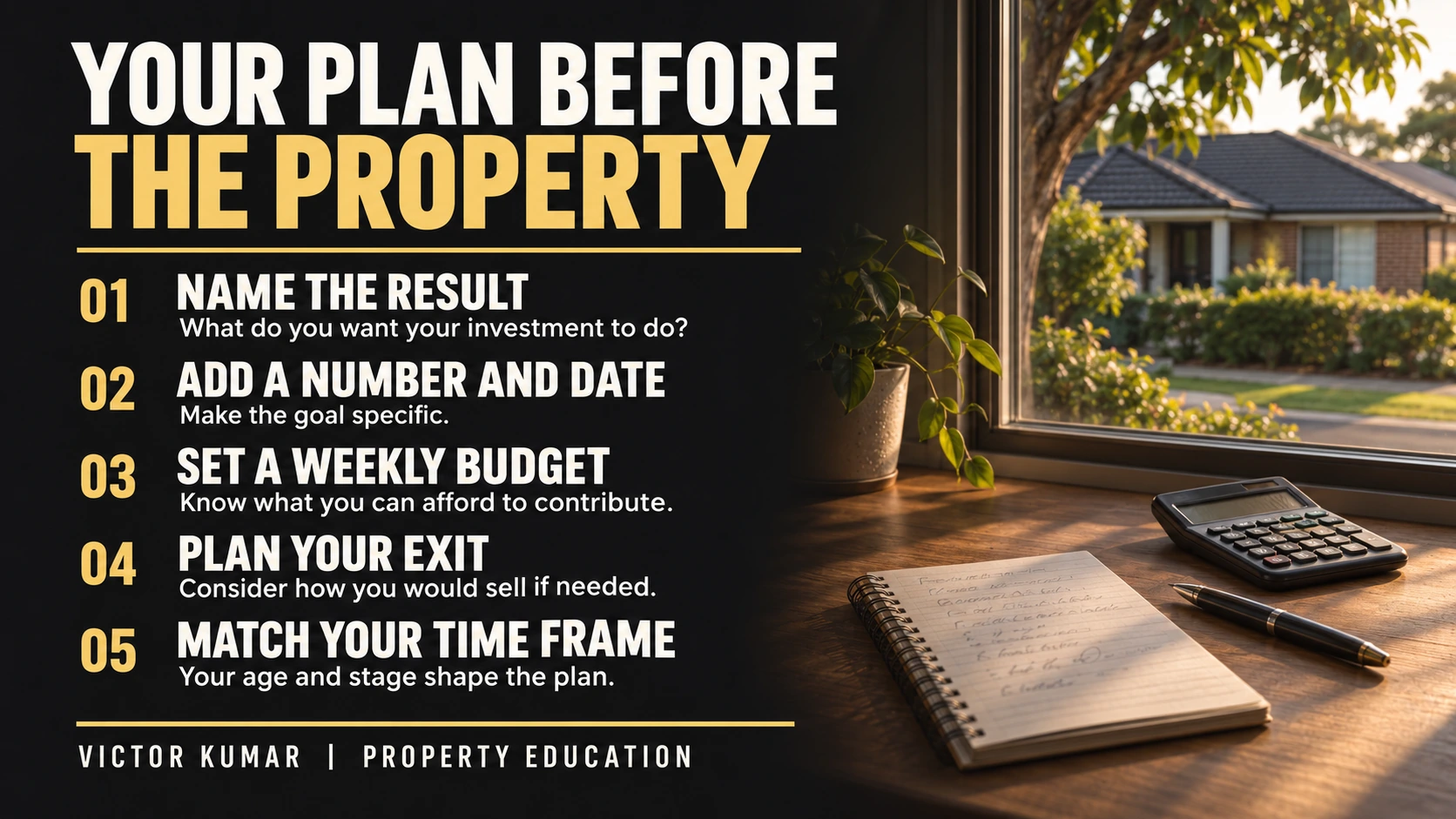
Try these steps before you look at a single property.
-
Name the result in plain words. Not “wealth”. Something real, like income that buys back one day a week, more time at home, help for your parents, or the freedom to leave a job.
-
Put a number and a date on it. Make it something you can touch. Our life goal setting guide can help.
-
Work out what you can chip in each week. Choose a figure that does not damage your lifestyle.
-
Know your exit. Assume every property you buy could go wrong. You should be able to sell and walk away with your money in any market.
-
Think about your age. If you start in your 20s, time forgives mistakes. If you start at 55, the plan looks very different.
Before you pay for any course on this, read are property investment seminars worth it.
What happens at the end?
Most people never think about this part. There are only a few ways to get rid of debt. You put surplus income from your job or business into the loans. You build surplus income inside the portfolio, for example with a granny flat, or you move loans to principal and interest. Or you sell something. A good plan uses the ones that suit you.
You may not need many
I used to think more was better. Now I tell people the opposite. For most people it is probably a couple of properties, and if you have those you are doing well. The question is never how many. It is whether the portfolio does the job you gave it.
My decades of investing experience, with every mistake I made along the way, is in my book, Super Charge Your Property Portfolio.
Frequently asked questions
Why do people invest in property?
To build wealth over time and to create choices, like income, time or the ability to look after family. Everyone’s reason is different, and yours should be written down before you buy.
Is property investment worth it in Australia?
It depends on your numbers, your time frame and your ability to hold through hard years. No property is guaranteed. Holding costs are real, and you should know yours before you start.
How many properties do I need?
There is no right number. Start with one and do it properly. Let the dust settle before you decide on the next step. For most people a couple is a good result.
Can you build a positive cash flow portfolio from day one?
In my view, not on an average salary in a strong growth area. Claims online often leave out costs such as stamp duty and the deposit you borrowed from another property.
What is the difference between investing and collecting properties?
A collector chases the number of properties. An investor buys for a set result and a set plan. We learned this the hard way. We built up a large negative cash flow while our salaries hid it, and we had to sell down a number of properties to fix it.
How much should I be able to afford to hold a property?
Choose a weekly amount you can chip in without hurting your lifestyle. If that is $200 a week instead of $600, your journey looks different, but the result can still be the same. Your own numbers matter more than any rule of thumb.
Do I need an exit plan before I buy?
Yes. Assume every property you buy could go wrong. You should be able to sell and walk away with your money in any market. A good plan also covers how you will bring the debt down over time.
This is general information only and not financial advice. Speak to a licensed professional before you make any investment decision.